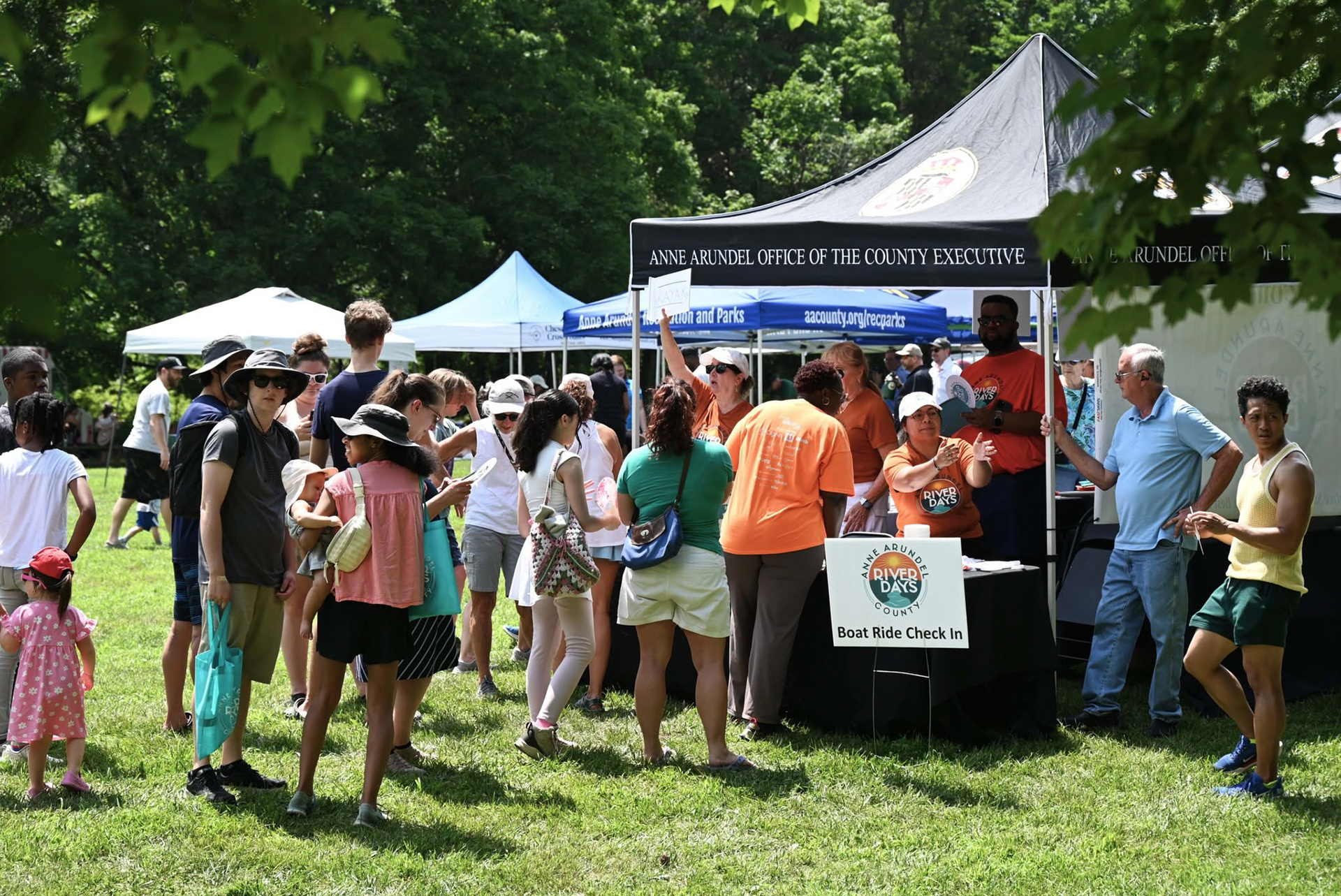
One challenge of working in local government is that residents see the County as one organization, even though it delivers services through many different departments and offices.
A family attending a community event may need information about health services, recreation programs, emergency preparedness, employment, transportation, public works, or housing. Each department may have valuable resources to offer, but if we don't communicate with one another, we can miss opportunities to bring those resources directly
to the people who need them.
In 2023, I worked with the Anne Arundel County Office of Emergency Management to help establish the County Outreach Coordination Group. Our goal was simple: bring together employees from agencies with community outreach responsibilities so we could share information, coordinate our efforts, and reach more residents.
The group began as a working-level forum where representatives could discuss upcoming events, exchange ideas and resources, and identify communities that might benefit from a more coordinated County presence. We created regular virtual meetings and a shared outreach calendar so departments could see where others were planning to be and where additional
support might be useful.
When a community organization planned a resource fair, we now had a network that could quickly share the opportunity with departments across the County. When several agencies planned to attend the same festival, they could coordinate materials, staffing, and services. When an outreach employee needed a contact in another department, they no longer had
to begin from scratch.
The group also created a space for us to learn directly from community-based organizations. In 2024, I introduced dedicating part of our meetings to organizations serving multicultural and historically underserved communities. Groups such as African Diaspora Affairs of Anne Arundel County and the Chase Your Dreams Initiative were invited to explain who they served, what needs they were seeing, how they engaged residents, and where County government could be a better partner.
That change was important. Effective outreach can't be only government talking to government about the community. We also need trusted organizations to tell us what they are hearing, where gaps remain, and how our services are experienced by the people we are trying to reach.
As the group evolved, its conversations became increasingly practical. Members shared public events and resource fairs, discussed successful outreach strategies, identified unmet community needs, and brought in speakers who could help us improve our work. Before the busiest part of the summer outreach season, for example, we invited Risk Management to discuss working safely in extreme outdoor conditions. That presentation became especially meaningful when one of my own team members later experienced mild heat exhaustion at an event.
It reminded me that coordination isn't limited to where we show up. It also includes how we prepare, how we support
our teams, and what we learn from one another.
By 2025, I wanted the group to take another step forward. Sharing opportunities helped us coordinate where departments were already going, but I also wanted us to ask a more important question: Were we consistently reaching the communities where our presence could make the greatest difference?
The launch of Anne Arundel County’s Community Wellbeing Index gave us a new way to approach that question.
Developed by the Office of Equity and Human Rights and ArundelStat, the index brings together neighborhood-level information across four dimensions: health, prosperity, security, and access. It helps show where residents may face barriers involving income, transportation, health insurance, internet access, educational attainment, housing costs, language access,
and other conditions affecting their quality of life.
Working with ArundelStat, we introduced the index to the Outreach Coordination Group and asked each participating department to provide the locations of its outreach and tabling events from the previous year. The goal was to map where County agencies had been present and compare that activity with the needs reflected in the index.
This allowed us to look beyond the number of events attended.
A busy outreach calendar may show that government is active, but it does not necessarily tell us whether we are reaching communities equitably. By placing our outreach locations alongside the Community Wellbeing Index, we could begin identifying areas where County agencies had a strong presence, communities that may have been underrepresented, and opportunities to coordinate our work more intentionally.
The exercise helped us identify neighborhoods to prioritize in 2026. When Severn emerged as an area where additional engagement could be valuable, for example, I shared the Meade Cluster Spring Event with the group and encouraged departments to participate. The event provided a natural opportunity to meet families where they already gathered rather than asking residents to come to us.
That is the difference between simply having data and using it.
By 2026, the group had become both a communication network and a planning tool. It could connect departments with community resource fairs and neighborhood events, while also helping us consider whether our overall outreach reflected the County’s different needs.
What I am most proud of is not any individual meeting or event. It is that we helped make collaboration, and
eventually data-informed collaboration, more routine.
Government agencies are often encouraged to work together, but collaboration does not happen simply because everyone agrees it is a good idea. Someone has to create the structure, maintain the relationships, share the information, and make it easier for people to participate. Once that structure exists, leaders must keep asking how it can become more focused,
equitable, and effective.
The County Outreach Coordination Group helped build that structure.
When our departments know one another, our community partners trust one another, and our outreach is guided
by both relationships and evidence, residents benefit.
Sometimes better government begins with something as simple as getting the right people in the same room. The next step is making sure we are showing up in the right places.
A family attending a community event may need information about health services, recreation programs, emergency preparedness, employment, transportation, public works, or housing. Each department may have valuable resources to offer, but if we don't communicate with one another, we can miss opportunities to bring those resources directly
to the people who need them.
In 2023, I worked with the Anne Arundel County Office of Emergency Management to help establish the County Outreach Coordination Group. Our goal was simple: bring together employees from agencies with community outreach responsibilities so we could share information, coordinate our efforts, and reach more residents.
The group began as a working-level forum where representatives could discuss upcoming events, exchange ideas and resources, and identify communities that might benefit from a more coordinated County presence. We created regular virtual meetings and a shared outreach calendar so departments could see where others were planning to be and where additional
support might be useful.
When a community organization planned a resource fair, we now had a network that could quickly share the opportunity with departments across the County. When several agencies planned to attend the same festival, they could coordinate materials, staffing, and services. When an outreach employee needed a contact in another department, they no longer had
to begin from scratch.
The group also created a space for us to learn directly from community-based organizations. In 2024, I introduced dedicating part of our meetings to organizations serving multicultural and historically underserved communities. Groups such as African Diaspora Affairs of Anne Arundel County and the Chase Your Dreams Initiative were invited to explain who they served, what needs they were seeing, how they engaged residents, and where County government could be a better partner.
That change was important. Effective outreach can't be only government talking to government about the community. We also need trusted organizations to tell us what they are hearing, where gaps remain, and how our services are experienced by the people we are trying to reach.
As the group evolved, its conversations became increasingly practical. Members shared public events and resource fairs, discussed successful outreach strategies, identified unmet community needs, and brought in speakers who could help us improve our work. Before the busiest part of the summer outreach season, for example, we invited Risk Management to discuss working safely in extreme outdoor conditions. That presentation became especially meaningful when one of my own team members later experienced mild heat exhaustion at an event.
It reminded me that coordination isn't limited to where we show up. It also includes how we prepare, how we support
our teams, and what we learn from one another.
By 2025, I wanted the group to take another step forward. Sharing opportunities helped us coordinate where departments were already going, but I also wanted us to ask a more important question: Were we consistently reaching the communities where our presence could make the greatest difference?
The launch of Anne Arundel County’s Community Wellbeing Index gave us a new way to approach that question.
Developed by the Office of Equity and Human Rights and ArundelStat, the index brings together neighborhood-level information across four dimensions: health, prosperity, security, and access. It helps show where residents may face barriers involving income, transportation, health insurance, internet access, educational attainment, housing costs, language access,
and other conditions affecting their quality of life.
Working with ArundelStat, we introduced the index to the Outreach Coordination Group and asked each participating department to provide the locations of its outreach and tabling events from the previous year. The goal was to map where County agencies had been present and compare that activity with the needs reflected in the index.
This allowed us to look beyond the number of events attended.
A busy outreach calendar may show that government is active, but it does not necessarily tell us whether we are reaching communities equitably. By placing our outreach locations alongside the Community Wellbeing Index, we could begin identifying areas where County agencies had a strong presence, communities that may have been underrepresented, and opportunities to coordinate our work more intentionally.
The exercise helped us identify neighborhoods to prioritize in 2026. When Severn emerged as an area where additional engagement could be valuable, for example, I shared the Meade Cluster Spring Event with the group and encouraged departments to participate. The event provided a natural opportunity to meet families where they already gathered rather than asking residents to come to us.
That is the difference between simply having data and using it.
By 2026, the group had become both a communication network and a planning tool. It could connect departments with community resource fairs and neighborhood events, while also helping us consider whether our overall outreach reflected the County’s different needs.
What I am most proud of is not any individual meeting or event. It is that we helped make collaboration, and
eventually data-informed collaboration, more routine.
Government agencies are often encouraged to work together, but collaboration does not happen simply because everyone agrees it is a good idea. Someone has to create the structure, maintain the relationships, share the information, and make it easier for people to participate. Once that structure exists, leaders must keep asking how it can become more focused,
equitable, and effective.
The County Outreach Coordination Group helped build that structure.
When our departments know one another, our community partners trust one another, and our outreach is guided
by both relationships and evidence, residents benefit.
Sometimes better government begins with something as simple as getting the right people in the same room. The next step is making sure we are showing up in the right places.